The live stream and its contents are intended solely for registered participants of the International Symposium on Synovial Sarcoma. Recording, copying, downloading, photographing, distributing, broadcasting, or using the stream — in whole or in part — by any means (including audio, video, screenshots, or screen-sharing) is strictly prohibited.
Do you have a question for our speakers? Share it here during the event and it will be addressed in the Q&A session at the end of each lecture.
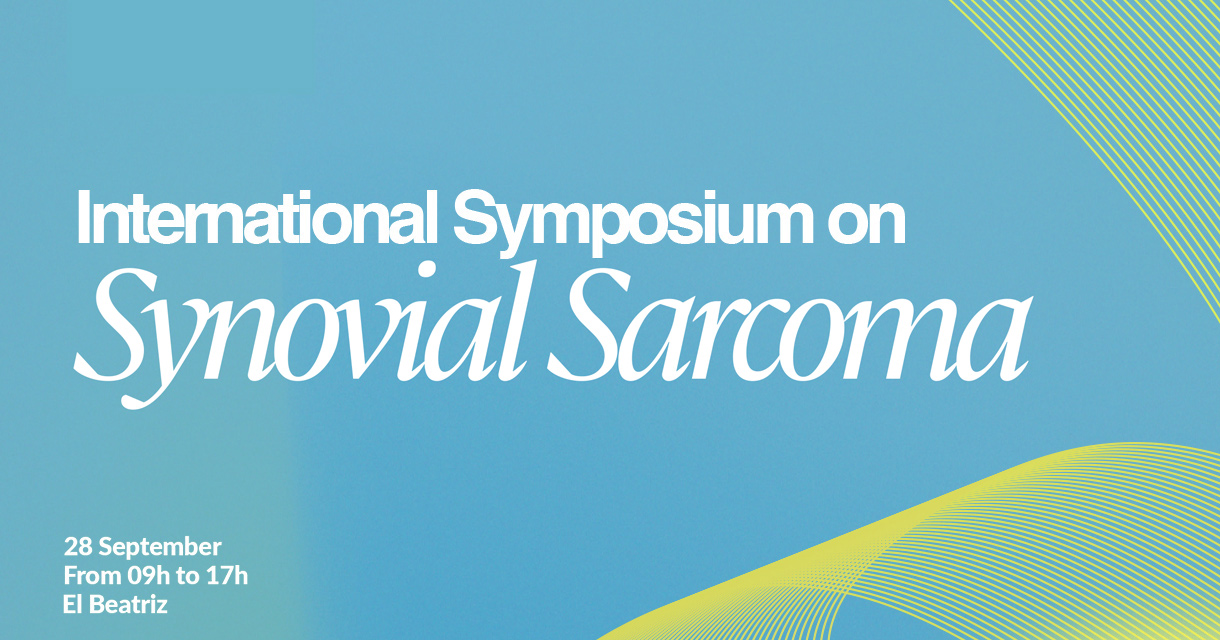
As a rare and biologically distinctive fusion-driven sarcoma, synovial sarcoma remains one of the most compelling challenges in translational oncology, particularly due to its prevalence in adolescents and young adults and the persistent unmet need for more effective therapies. In response to this challenge, the PharmaMar Foundation is proud to establish the International Symposium on Synovial Sarcoma 2026, a high-level scientific forum designed to advance discovery and accelerate therapeutic innovation.
The symposium will bring together world-leading experts in sarcoma biology, epigenetics, translational research, and clinical oncology to explore the molecular architecture of synovial sarcoma.
By creating a unique platform for scientific dialogue across disciplines, the meeting seeks to catalyze new collaborations, challenge existing paradigms, and define the next generation of therapeutic opportunities for this disease.
About the PharmaMar Foundation
The PharmaMar Foundation’s mission is to promote the development of science, scientific research and medicine, and to contribute to the knowledge and defense of marine biodiversity.
In the area of education, we consider it especially important for society to be aware of the main advances in the field of research and health.
To this end, the PharmaMar Foundation has several initiatives, such as our series of scientific conferences, and we collaborate with various institutions and organizations to disseminate information and specialized knowledge in the field of health and science.
Medical oncologists, pediatric oncologists, and sarcoma specialists involved in the diagnosis and treatment of synovial sarcoma.
Orthopaedic oncologists, sarcoma surgeons, radiation oncologists, and multidisciplinary specialists participating in sarcoma care pathways.
Basic, translational, and computational researchers working on synovial sarcoma biology, fusion-driven cancers, epigenetics, chromatin regulation, and tumor microenvironment.
Clinical investigators and drug development professionals engaged in sarcoma clinical trials, precision oncology, immunotherapy, and novel therapeutic strategies.
Pathologists and molecular diagnosticians with expertise in soft tissue sarcomas and fusion-driven malignancies.
Representatives from foundations, advocacy groups, and patient organizations focused on synovial sarcoma, sarcomas, or rare cancers.
Healthcare professionals, researchers, and stakeholders with a broader interest in rare tumor biology, translational oncology, and sarcoma innovation.
Are you interested in attending the International Congress on Synovial Sarcoma? Fill out the form below to secure your place and be part of this high-level scientific meeting, where we will share knowledge, innovation and opportunities for collaboration in the fight against Synovial sarcoma.
Registration Notice
Participation in the symposium is free of charge. However, registration is limited to professionals and organizations directly involved in Synovial sarcoma or sarcoma research and care, as outlined in the “Who Should Attend” section. All registration requests will be individually reviewed and validated by the organizing committee.
Where
El Beatriz Auditorium, José Ortega y Gasset, 29 Madrid, Spain.
El Beatriz Auditorium, José Ortega y Gasset, 29 Madrid, Spain
When
September 28th 2026
Contact
Fundación PharMamar
Tel: +34 91 846 62 40 info@fundacionpharmamar.com
PARTICIPANTS
Participants
Lorem ipsum dolor sit amet, consectetur adipiscing elit. Ut elit tellus, luctus nec ullamcorper mattis, pulvinar dapibus leo.
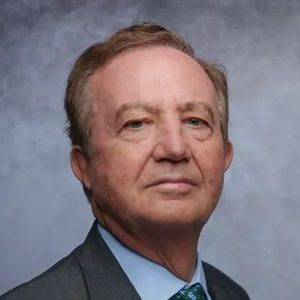
Dr. José María Fernández Sousa-Faro
PharMamar Executive Chairman
José María founded PharmaMar in 1986 and is Executive Chairman. Professor of Biochemistry at the Complutense and Santiago de Compostela Universities and holds a degree in Business Management from IESE Business School in Madrid. He has over 100 publications and patents in the area of biochemistry, antibiotics and molecular biology.
He has more than 35 years of experience in the pharmaceutical industry at ICI-Farma, Antibióticos, Zeltia and PharmaMar. He was a member of the Boards of Directors of Antibióticos, Penibérica, Biolys, ICI-Farma, Pescanova, Transfesa, Cooper-Zeltia, ICI-Zeltia and Banco Guipuzcoano.
Prof. Jean-Ives Blay
Léon Bérard Center, France
Jean-Yves Blay is a French medical oncologist and researcher, internationally recognized for his expertise in oncology.
He is currently Professor of Oncology at Université Claude Bernard Lyon 1 and General Director of the Centre Léon Bérard in Lyon, one of Europe’s leading comprehensive cancer centers.
He is a world-renowned specialist in sarcomas and rare cancers, with major contributions to translational research, clinical trials, and the development of targeted therapies.
Professor Blay has held key leadership roles in international oncology organizations, including former President of the EORTC and leadership positions within ESMO.
He also directs the EURACAN network, which aims to improve care for rare cancers across Europe.
Dr. Gregory Cote
Co-chair
Dr. Cote is a medical oncologist with at the Massachusetts General Hospital Cancer Center in the Henri and Belinda Termeer Center for Targeted Therapies (Phase I), the Center for Sarcoma and Connective Tissue Oncology and the Stephan L. Harris Center for Chordoma. His primary research interest is in developing novel agents for connective tissue malignancies through translational studies and early phase clinical trials.
Dr. Kevin B. Jones
Primary Children's Hospital / Huntsman Cancer Institute (USA)
Dr. Kevin Jones is Professor of Orthopaedics at University of Utah and leader of the Sarcoma Disease Center at Huntsman Cancer Institute, Salt Lake City. He has participated in and assembled teams to work on sarcoma biology both within his institution and internationally. His laboratory research group focuses on improved targeted therapies in which mouse genetic models are developed to dissect pathways of importance to initiation and progression of sarcomas.
Dr. Jones’ work utilizes conditional activation of translocation-associated fusion oncogenes as well as manipulation of additional modifying genes directed toward improved understanding of the conditions that promote or inhibit sarcomagenesis. This work has led to generous experience with comparative genomics and epigenomics. The study of the epigenetic determinants of transcriptional state in cells that harbor few genetic code alterations has already revealed important knowledge that pertains to more complex genome cancer types as well as to transcriptional biology more generally.
Dr. Marc Ladanyi
Memorial Sloan Kettering Cancer Center (USA)
Marc Ladanyi, MD is Associate Attending Pathologist and Director of the Laboratory of Diagnostic Molecular Pathology in the Department of Pathology at Memorial Sloan-Kettering Cancer Center in New York City. The focus of his research is the basic and applied molecular pathology of sarcomas, in particular those with specific chromosomal translocations causing gene fusions, in order to help identify molecular markers or targets for diagnostic, prognostic, and therapeutic applications.
Dr. Torsten Nielsen
University of British Columbia / Vancouver General Hospital (Canada)
Professor Torsten Nielsen is a clinician-scientist pathologist from the University of British Columbia in Vancouver, where he serves as the Director of the MD/PhD training program. He is also the Chair of the Research Committee for the Connective Tissue Oncology Society, and a Fellow of both the Canadian Academy of Health Sciences and of the Royal Society of Canada.
His research focusses on translating high thoughput gene and protein expression data into practical diagnostic, prognostic and predictive biomarkers in sarcomas and breast cancer, several of which have entered clinical practice and improved patient care. Dr. Nielsen’s work has also advanced our fundamental understanding of the molecular drivers underlying not only synovial sarcoma, but also tenosynovial giant cell tumor and epithelioid sarcoma, among others. To further translate scientific findings into new therapies, Prof. Nielsen also runs active target identification and preclinical experimental therapeutics projects, while working closely on trial design and execution with the Sarcoma and the Correlative Sciences committees of the Canadian Cancer Trials Group.
Dr. Seth Pollack
Feinberg School of Medicine, Northwestern University (USA)
Seth M. Pollack, MD, Professor with Tenure at Northwestern University Feinberg School of Medicine, is an internationally recognized physician-scientist in cancer immunotherapy and sarcoma research. He serves as the Steven T. Rosen Professor of Cancer Biology, Director of the Sarcoma Program, and Co-Leader of the Cancer Immunology and Immunotherapy Initiative at the Robert H. Lurie Comprehensive Cancer Center.
A committed leader in the field, Dr. Pollack has served on the NCCN Soft Tissue Sarcoma and GIST Guidelines Panels, the National Leiomyosarcoma Foundation Executive Committee, and the medical advisory boards of the Sarcoma Alliance and the Desmoid Tumor Research Foundation. He is Senior Editor for Molecular Cancer Therapeutics, an invited author of the Journal of Clinical Oncology sarcoma immunotherapy review, and a frequent speaker at major international meetings.
Dr. Javier Martin Broto
Fundacion Jimenez Diaz Health Research Institute, Spain
Medical Oncologist since 1994. Founder Member of The Spanish Group for Research on Sarcomas (GEIS) in 1994 and member of the executive committee of GEIS since 1994 (He was GEIS Chairman from 2010 to 2018) to 2022.
He obtained PhD degree in Molecular Biology in 2010 focusing on molecular prognostic biomarkers in GIST. Currently, he coordinates clinical sarcoma assistance with translational research, leading a basic research team in the lab in Fundación Jimenez Diaz University Hospital, in Madrid. He leads the Sarcoma Latin-American & European Sarcoma Network (SELNET) consortium.
Additionally, he’s running and designing several trials on sarcoma patients, some of them as the coordinator at national and international levels. He is the author/co-author of more than 200 manuscripts on sarcoma.
Dr. Paul Huang
Institute of Cancer Research, UK
Paul Huang is Professor of Translational Cancer Research at the Institute of Cancer Research (ICR) in London, UK. He received his PhD in Biological Engineering from Massachusetts Institute of Technology. His laboratory focuses on understanding the molecular pathology of sarcomas, with the goal of developing biomarkers and new therapies for these rare diseases. Paul is Deputy Director of the Royal Marsden-ICR Sarcoma Research Centre and Co-Director of the CRUK Sarcoma Accelerator Consortium.
Dr. Lorenzo D'Ambrosio
University of Torino, Italy
Lorenzo D’Ambrosio is an Italian medical oncologist specializing in rare cancers, particularly soft tissue sarcomas and bone tumors. He is an Associate Professor in the Department of Oncology at the University of Turin and practices in leading university hospitals in northern Italy.
His work combines clinical practice with translational research and participation in international clinical trials, with a focus on immunotherapy and the development of novel therapeutic strategies for rare cancers.
D’Ambrosio has contributed to projects funded by organizations such as the AIRC Foundation, leading innovative research on the interaction between the immune system and tumors, aimed at improving treatments for aggressive sarcomas.
Dr. Patrick Schöffski
Katholieke Universiteit, Belgium
Patrick Schöffski is a German medical oncologist, specialized in oncology, hematology, and internal medicine.
He is currently a professor at KU Leuven (Belgium) and heads both the Department of General Medical Oncology and the Laboratory of Experimental Oncology at the University Hospitals Leuven.
He is internationally recognized as an expert in the treatment of solid tumors, lymphomas, and particularly sarcomas and rare cancers, and has been involved in numerous clinical trials and the development of new anticancer drugs.
He has also held important roles in European scientific organizations such as the EORTC (European Organisation for Research and Treatment of Cancer) and is an active member of several international oncology societies.
In summary: a leading European figure in clinical oncology research, with a focus on sarcomas and innovative therapies for rare cancers.